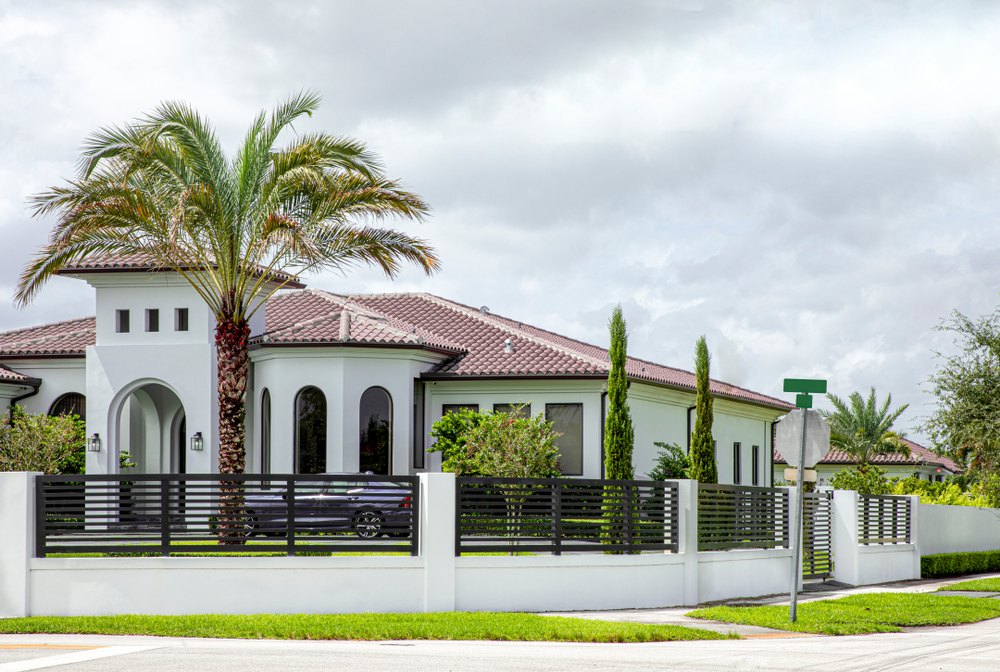
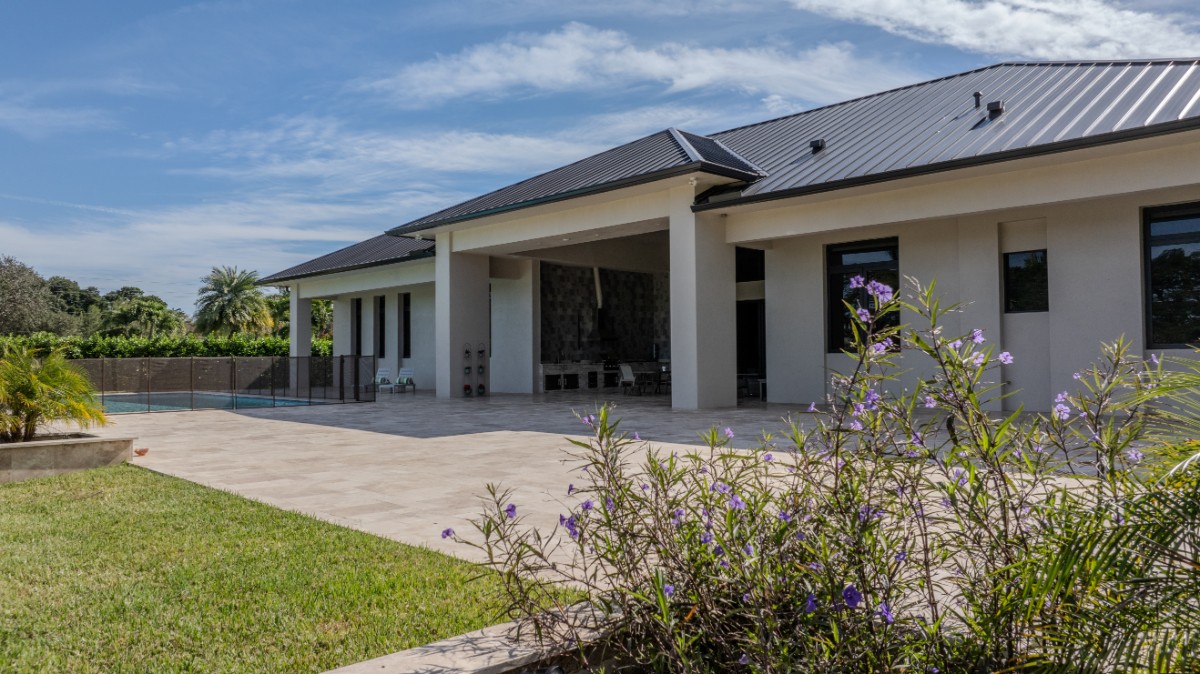
In South Florida, hurricane resistance gets a lot of attention when designing a home. Wind matters, but water is a more regular challenge. During the rainy season, heavy storms can quickly leave water standing in streets, yards, driveways, and low areas around a property.
For anyone planning a custom home in South Florida, these conditions should be considered from the beginning. Broward County is especially sensitive because of its flat terrain, high water table, and intense seasonal rainfall. Drainage, finished-floor elevation, roof design, landscaping, and waterproofing all affect how well a home handles that water.
Why Do Homes in South Florida Flood When It Rains?
Homes in South Florida flood because heavy rainfall combines with flat terrain and a high water table, making it difficult for water to drain or soak into the ground quickly.
During the wet season, the soil may already be saturated when another storm arrives. At the same time, roofs, driveways, pool decks, patios, and other hard surfaces create additional runoff. In Broward County, even a small difference in site elevation can determine whether that water moves toward a drainage area or collects beside the house.
Flooding is not limited to waterfront properties. An inland South Florida home can still experience standing water if the lot, neighboring properties, streets, and local drainage systems are all handling water at the same time.
How Do You Prevent Water Intrusion and Flooding in a Broward County Home?
Preventing water intrusion starts with moving water away from the home and keeping vulnerable parts of the building above areas where water may collect.
Proper site grading is one of the first steps. The ground, driveway, pool deck, terraces, and landscaping should work together so water moves away from exterior walls, garage doors, entries, and other openings.
Swales can help guide or temporarily hold surface water, while catch basins and trench drains can collect runoff in areas where water tends to concentrate. French drains may also be appropriate in some conditions, but South Florida’s high groundwater means they should be selected based on the actual property rather than treated as a standard solution.
The main goal is coordination. Drainage works best when it is developed with the architecture instead of being added around a finished site plan.
Does My Lot Need a Drainage Plan?
A new custom home or major renovation in Broward County should have drainage conditions reviewed early, even when the project does not require a complicated drainage system.
The property survey and site elevations help show how the lot relates to the street, neighboring properties, swales, and existing low points. From there, the architect and consultants can coordinate the proposed home, driveway, garage, pool, terraces, and landscape.
This is especially important because changes to one part of the property can affect another. Raising a driveway, adding hardscape, or changing the landscape can alter where stormwater travels. Addressing those relationships early can prevent awkward slopes or drainage corrections later in the project.
What Is Base Flood Elevation and How Does It Affect My Build?
Base Flood Elevation, or BFE, is the flood elevation FEMA uses as part of its floodplain mapping and regulations. It can influence how high a new South Florida home needs to be built.
Flood zones and elevation requirements should be reviewed early because they can affect much more than the foundation. Finished-floor height can influence the front entry, garage, driveway slope, pool deck, terraces, landscaping, and placement of mechanical or electrical equipment.
For a Broward County home, raising the finished floor can provide important separation from temporary standing water. The challenge is making that elevation work naturally with the rest of the property. When it is planned from the beginning, a raised entry or terrace can feel intentional. When it is addressed late, it can create steep driveways, extra steps, and difficult transitions.
Can Driveways and Hardscape Make Flooding Worse?
Yes. Large paved areas increase runoff because they shed water instead of allowing it to soak into the ground.
Driveways, patios, walkways, motor courts, and pool decks can cover a significant part of a South Florida property. Their slope and location should be coordinated with drainage so they do not send water toward the house.
Permeable paving, lawn areas, planting beds, and other absorbent surfaces can help reduce runoff where appropriate. These features do not replace proper drainage, but they can reduce the amount of water that needs to be collected elsewhere on the site.
How Should a Flat Roof Handle South Florida Rain?
A flat or low-slope roof should direct water toward properly located drains or scuppers and include overflow drainage in case the primary system becomes blocked.
Flat roofs are common in contemporary Broward County homes, but they still need enough slope to move water efficiently. Parapets, roof edges, penetrations, flashing, and drains also need careful waterproofing because these are common locations for water intrusion.
Roof design in South Florida has to address both wind and rain. The same roof, structural, and opening details that help manage heavy rainfall also play an important role in hurricane-resistant home design in Broward County’s HVHZ.
How Do Moisture and Mold Problems Start?
Moisture problems can begin with small leaks that allow water to become trapped behind walls, around windows, below flooring, or within roof and exterior assemblies.
South Florida humidity can make these conditions worse because wet materials may take longer to dry. A leak does not always create an obvious puddle right away. Repeated water intrusion can gradually damage finishes and create conditions where mold can develop.
That is why waterproofing, flashing, windows, doors, roofing, and air-conditioning all play a role in moisture control. Keeping water out is the first step, but the home also needs to manage humidity once the storm has passed.
Why Should Water Management Be Part of the Design From the Beginning?
Water management should be planned early because site drainage, flood elevation, roof design, hardscape, landscaping, and waterproofing all affect one another.
A home in Broward County has to handle both hurricane conditions and ordinary South Florida rain. Wind resilience may receive more attention, but heavy rainfall is something the property will face every year.
These decisions can also affect project scope and cost. Foundations, flood requirements, drainage systems, site work, and engineering can all influence the cost of designing a custom home in South Florida.
Designing for South Florida Rain
Every Broward County property handles water differently. A waterfront home in Fort Lauderdale may have flood elevation and tidal concerns, while an inland property may be more affected by street drainage, neighboring lots, or low areas within the site.
The design should respond to the actual property rather than relying on the same solution for every home.
For anyone planning a custom home in South Florida, these conditions should be considered from the beginning